 Twice Told
Mysteries
Tales
TaleChina, Tang to Song
Before Xuanzong's dream, Zhong Kui was already a name
Shen Kuo wrote down the emperor's fever dream of Zhong Kui, and in the same item reported an epitaph that names a Zhong Kui centuries before it.
The Cleveland Museum of Art, 1959.185, cropped TaleKyoto and Obama (Wakasa), Japan, 1449 to 1764
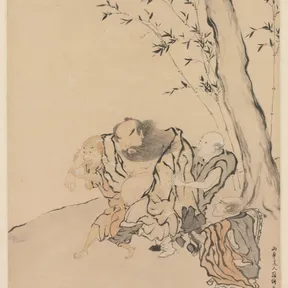
Yao Bikuni, the nun shown in Kyoto in 1449
In 1449 three Kyoto diaries recorded a nun from Wakasa shown for a fee. They disagree on her age and never mention a mermaid, which comes 150 years later.
National Diet Library, call number 69-50, cropped TaleWawel hill, Kraków, Poland, the end of the 12th century to 1597
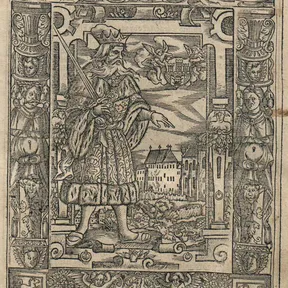
Kraków's Wawel dragon had no cobbler until 1597
The oldest telling of the Wawel dragon, Kadłubek's, has a crag, no cave and no cobbler. The cobbler Skuba first appears in Bielski's chronicle of 1597.
Biblioteka Jagiellońska, BJ St. Dr. Cim. 8176, cropped TaleRiver Bagrada (Medjerda), Tunisia, 256 or 255 BC
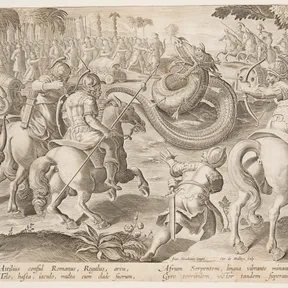
The serpent of the Bagradas: Regulus's monster without a witness
Pliny says a 120-foot serpent held off Regulus's army and that its skin hung in a Roman temple. Polybius, who tells the same campaign, never mentions it.
Cooper Hewitt, 1952-37-15 TaleNewfoundland and the Gulf of St Lawrence, Canada, 1542 to 1575
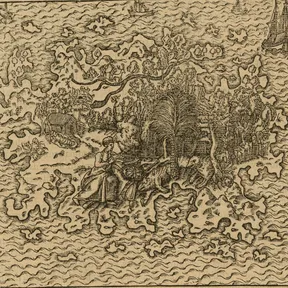
Marguerite de La Roque: the woman on the Isle of Demons
The Queen of Navarre's marooned couple have no demons, no lover and no names. Thevet's book of 1575 has all three, and says the woman told it to him herself.
John Carter Brown Library, E575 T418c, cropped TaleThe Dombes, near Lyon, France, 13th century to 20th century
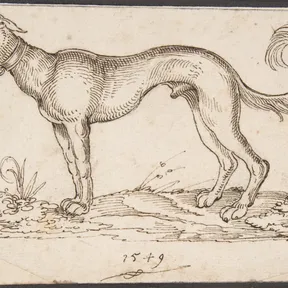
Saint Guinefort, the greyhound in the well
A greyhound killed for saving a child was honoured as a martyr near Lyon. The friar who recorded the cult says he had the dog dug up and its bones burned.
The Metropolitan Museum of Art, 2001.497 TaleChina, Zuozhuan to the Tang
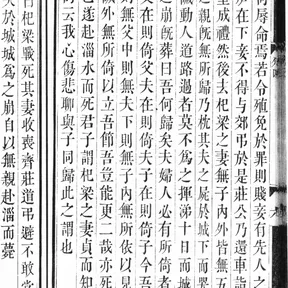
Meng Jiangnü's wall was a city wall first
The wall that falls for Qi Liang's widow was a city wall for centuries. Tang texts, one a Japanese manuscript of 747, move her to the Great Wall.
National Diet Library, call number わ159-113, cropped TaleLake Champlain, New York and Vermont, 1609 to 1970
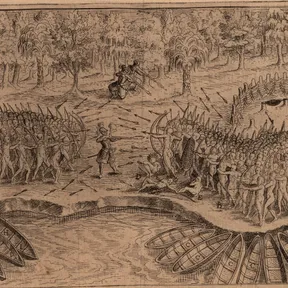
Champ of Lake Champlain: the serpent Champlain never described
Champlain described a five-foot fish in the lake. The 20-foot, horse-headed serpent said to be his is first in print, as far as we found, in a 1970 magazine.
John Carter Brown Library, E613 C453v [R], cropped TaleVauvert, Paris, France, 1257 to 1882
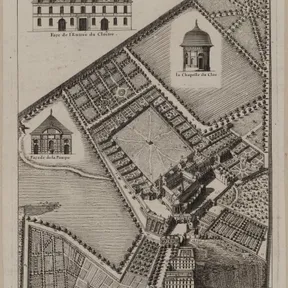
Where the devil of Vauvert first appears
French sends people "au diable Vauvert". The Carthusians took the château in 1257, but the earliest telling of its devil we could read dates from about 1500.
Musée Carnavalet, G.39054 TaleKinderdijk and Dordrecht, Netherlands, 1421 to 2022
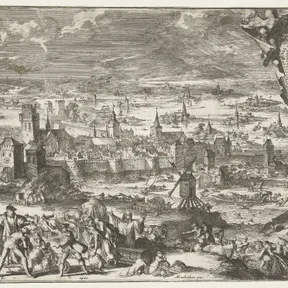
The Kinderdijk cradle and its cat: first ashore at Dordrecht
A baby in a cradle, with a cat keeping it level, is said to have given Kinderdijk its name in 1421. The oldest text we found with the cat names no dike.
Rijksmuseum, RP-P-OB-76.843, cropped TaleKumano and Saga, Japan, 219 BCE to 1826
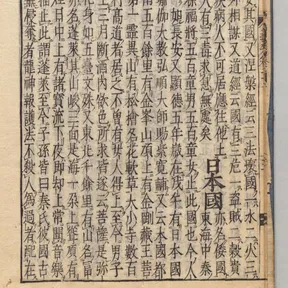
How Xu Fu got to Japan
The Shiji sends Xu Fu to sea for the First Emperor and names no landing. The first text we found that puts him in Japan is a monk's book of the 950s.
国立公文書館所蔵, 310-0158, cropped TaleMusashi (now Tokyo), Japan, 1685 to 1993
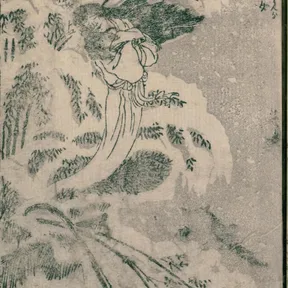
Yuki-onna, the snow woman of Kwaidan, 1904
Hearn said a farmer of Chōfu told him the tale of the snow woman who marries. Tōda traces the Japanese folktale versions back to Hearn's English.
National Diet Library, call number 辰-23, cropped TaleYotsuya, Edo (now Shinjuku, Tokyo), Japan, 1727 to 1952
Oiwa of Yotsuya was divorced in the old text and drugged on the stage
Shinjuku City says the real Oiwa and her husband got on well. The old Yotsuya text has him divorce her, and Nanboku's 1825 play has a drug ruin her face.
The Metropolitan Museum of Art, 2011.135 TaleHitachi (now Ibaraki), Japan, 1803 to 2026
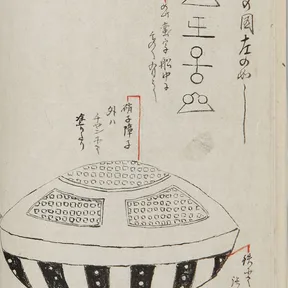
Where the Utsuro-bune landed depends on the text
Fourteen old texts tell of a round vessel and a woman with a box on a Hitachi beach in 1803. The beach named in the Toen-kai text appears in no Edo record.
国立公文書館所蔵, 弘賢随筆 特095-0004, cropped TaleHarz and Solling, Germany, 1558 to 1835
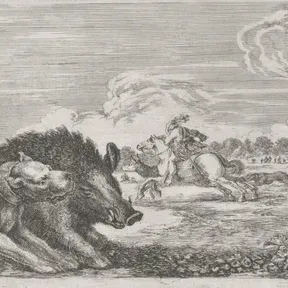
Hackelberg, the wild huntsman, is buried in more than one place
Kirchhof wrote that he found Hackelberg's grave in the Solling in 1558. A Brunswick paper of 1756 reports a stone dated 1581. His identity is not secured.
Rijksmuseum, RP-P-OB-35.014, cropped TaleSantash pass, Tüp valley, Kyrgyzstan, 1537 to 1857
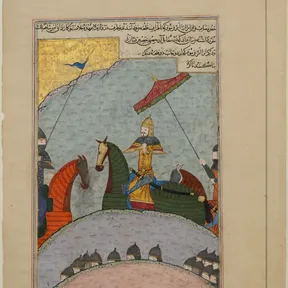
San-Tash and the legend of Timur's counted stones
In 1856 Chokan Valikhanov wrote down the tale of Timur's counted stones, then added that history contradicts it. A Kazakh account names a different builder.
The Metropolitan Museum of Art, 55.121.16 TaleŌtemachi, Tokyo, 940 to 2020
Masakado's head mound in Ōtemachi: a curse in print by 1926
Office towers ring a Tokyo mound said to hold Taira no Masakado's head. The earliest column we found tying it to officials' illnesses is from December 1926.
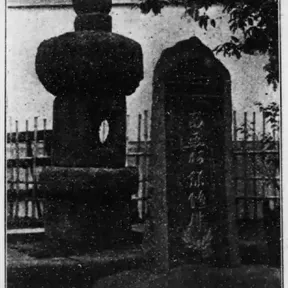
National Diet Library, 515-17, cropped TaleMoscow, Russia, 1709 to 1934
The Sukharev Tower warlock: what Jacob Bruce left on paper
The calendar that carries Jacob Bruce's name says on its first sheet that a librarian, Vasily Kipriyanov, did the work and Bruce only supervised.
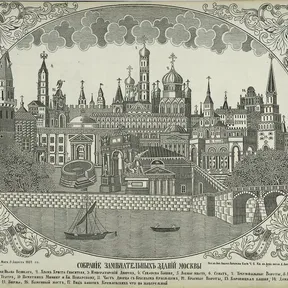
The New York Public Library, image 479625 TaleMiyoshi, Hiroshima, Japan, 1749 to 1859
The Inō mononoke roku: where the demon king's mallet came from
In 1749 a demon king is said to have given a sixteen-year-old in Miyoshi a mallet. A comparison of four versions shows none in the text dated 1783.
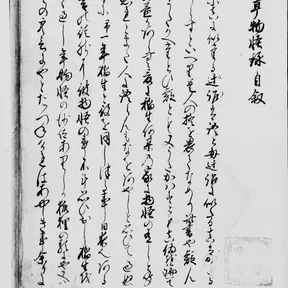
University of Tokyo General Library, A00-5594, cropped TaleShush (Susa), Khuzestan, Iran, 638 to 1869
One writer hangs Daniel's coffin from a bridge at Susa
Al-Tabari has Daniel's remains found at Susa in 638 and hidden on 'Umar's order. Benjamin of Tudela, about 1167, has his coffin hanging from a bridge.
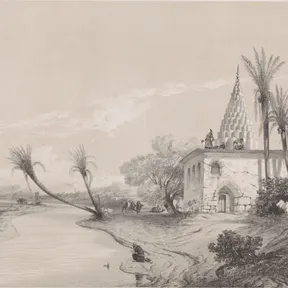
Rijksmuseum, Amsterdam, RP-P-1966-445, cropped TaleEdam and Haarlem, Holland, Netherlands, 1403 to 1786
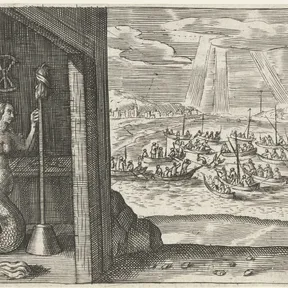
Before the Edam mermaid had a tail
Edam says a mermaid named Minne was caught in 1403 and taught to spin. The chronicles name no one and give no tail; the tail first shows in a print of 1645.
Rijksmuseum, RP-P-OB-78.246, cropped TaleUasin Gishu and the Nandi forest, Kenya, 1909 to 1927
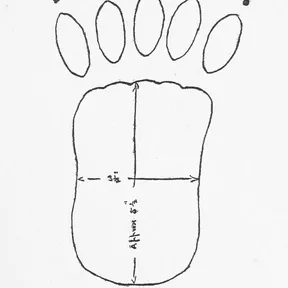
The Nandi bear and the devil called Chemosit
The first detailed account of the Nandi bear, printed in 1912, gives no year for the sighting. A 1909 book on the Nandi calls Chemosit a one-legged devil.
Biodiversity Heritage Library TaleHanyū, Shimōsa (now Jōsō, Ibaraki), Japan, 1672 to 1859
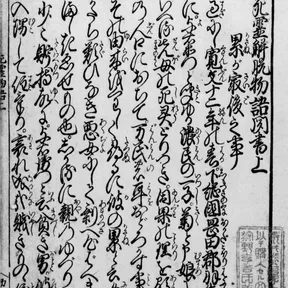
Kasane's spirit left Hanyū village twice
In 1672 a Shimōsa village freed a girl from Kasane's spirit with its own nenbutsu, and the spirit came back. Only then, the one account says, did Yūten come.
「死霊解脱物語聞書」(東北大学附属図書館所蔵), 4/11444/2, cropped TaleNew Mexico and Texas, 1629 to 1690
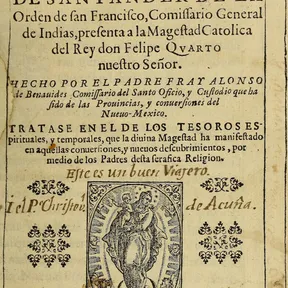
The Lady in Blue had no name in 1630
In 1630 the Jumano told the friars a young woman had preached to them, dressed like the nun in a portrait. Ágreda's name and the blue came later.
Courtesy of the John Carter Brown Library, BA630 .B456m, cropped TalePars and Kerman, Iran, Sasanian era to 1010
Haftvad and the worm in the Kārnāmag, Tabari and the Shahnameh
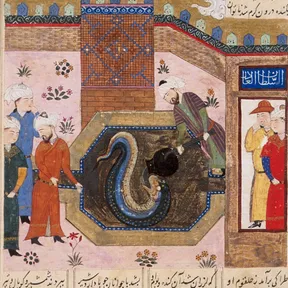
In the Pahlavi Book of Ardashir the worm of Haftānbōxt drinks blood and dies of molten brass; the girl with the apple appears only in Ferdowsi.
Los Angeles County Museum of Art, M.73.5.411, www.lacma.org TaleVrhnika (Ober-Laybach), Slovenia, 1684 to 1689
Vrhnika's baby dragons: Valvasor's lizard and the olm
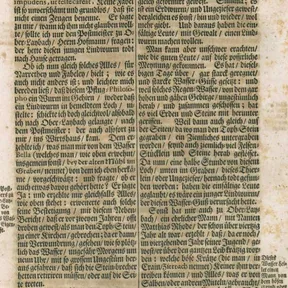
A tourism page says Valvasor wrote of a dragon that spews out its young. His 1689 chapter has one dead, lizard-shaped animal a postmaster hung up for weeks.
National and University Library of Slovenia, dLib.si TaleAkamagaseki (now Shimonoseki), Japan, 1782 to 1957
Hōichi the Earless was “ear-cut” in the book Hearn owned
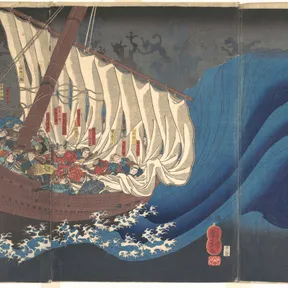
The samurai in Hearn's Hōichi calls out "Kaimon!" at the gate. In the 1782 book Hearn owned he says only "open", and the player is "ear-cut", not earless.
The Metropolitan Museum of Art, JP1565 TaleYingge, New Taipei, Taiwan, 1871 to 2021
Yingge Rock's cannon story was in print by 1871, without Koxinga
A 2006 heritage notice says Koxinga's cannon broke the neck of Yingge Rock. A museum journal of 2021 says his army never came this far north.
National Diet Library, 412-34, cropped TaleBretten, Kraichgau, Germany, 1504 to 1816
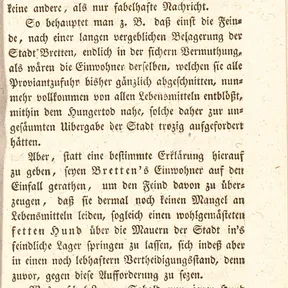
How the dog of Bretten got its siege
Bretten's tailless dog is said to have ended a siege in 1504. The oldest telling, printed in 1805, gives no year, and the real siege ended in a truce.
Badische Landesbibliothek Karlsruhe, O 50 A 379, cropped TaleHigo (Kumamoto), Japan, 1843 to 1882
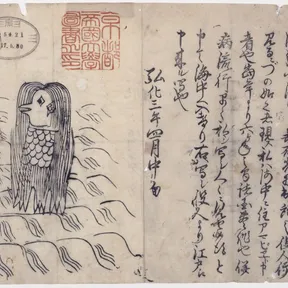
Amabie, from a single news sheet of 1846
In 1846 a news sheet drew a long-haired sea creature from Higo and named it Amabie. Every other known paper about the creature calls it amabiko.
Main Library, Kyoto University, RB00000122, cropped TaleAdams, Robertson County, Tennessee, 1820 to 2017
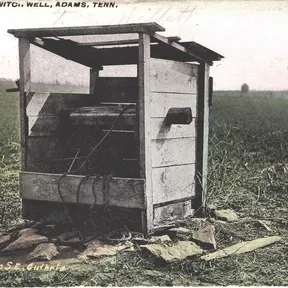
Andrew Jackson and the Bell Witch: one letter from 1894
A 2008 federal listing says Andrew Jackson visited the Bell Witch Cave in 1819. The 1894 book behind the story sets his visit on a road and in a farmhouse.
Courtesy Tennessee State Library & Archives, ID# 48414 TalePine Barrens, New Jersey, 1687 to 1939
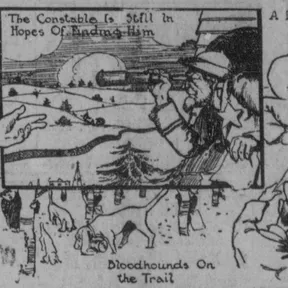
The Jersey Devil was first called Leeds’s devil
In 1700 a Quaker writer called the almanac maker Daniel Leeds “Satan’s Harbinger”. By 1859 a devil born to a woman named Leeds was a tale of the Pine Barrens.
Library of Congress, Chronicling America TaleChina, 1679 to 1985
Before jiangshi hopped, they ran
In the Qing stories behind the jiangshi, corpses run, grab and cling to trees. Only one of Yuan Mei's comes leaping, and the escorted dead of 1909 walked.
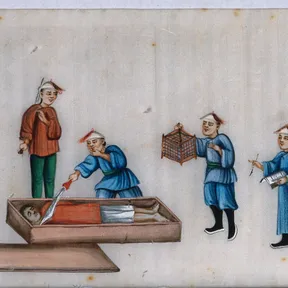
Wellcome Collection, 582385i TaleNasu, Tochigi, Japan, About 1400 to 2022
The killing stone of Nasu and a fox with two tails
The killing stone at Nasu split in two in March 2022. In the oldest written versions of its legend, the fox has two tails, not nine.
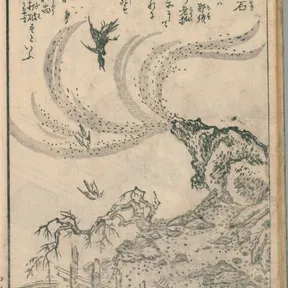
National Diet Library Digital Collections TaleLeifeng Pagoda, Hangzhou, China, 975 to 2002
Lady White Snake and the fall of Leifeng Pagoda
When Hangzhou's Leifeng Pagoda fell in 1924, Lu Xun took the snake's side. In the oldest full version, from 1624, she is a python her husband helps seal away.
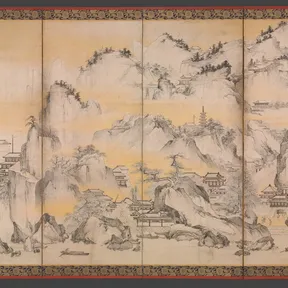
The Metropolitan Museum of Art, 2015.300.74.1 TaleLikouala, Republic of the Congo, 1776 to 1997
Mokele-mbembe, report by report, since 1776
The oldest text behind Mokele-mbembe is a 1776 note on claw prints. The name reached print in 1929, in a report that kept the animal out of the Likuala rivers.
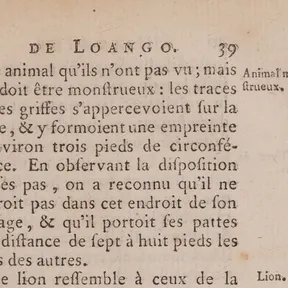
Wellcome Collection TaleChina; the earliest texts are from Shanghai, 1933 to 2009
The earliest Nian beast we could find dates from 1933
The Nian, the beast driven off with red paper and firecrackers, is said to be thousands of years old. The oldest text naming it that we found is from 1933.
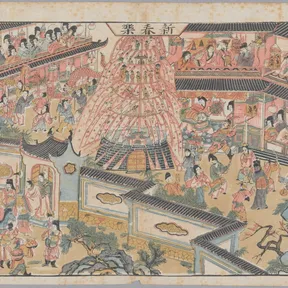
The Cleveland Museum of Art, 2025.93 TaleHimeji, Hyōgo, Japan, About 1577 to 1952
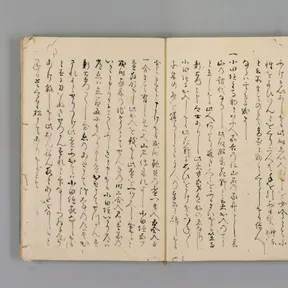
How Okiku came to Himeji Castle’s well
Himeji Castle shows visitors the well Okiku is said to lie in. The oldest version of her story has no Okiku, no plates and no well.
Kobe University Library, 地理-22-1, cropped