 Twice Told
Places
Europe
TaleWawel hill, Kraków, Poland, the end of the 12th century to 1597
Kraków's Wawel dragon had no cobbler until 1597
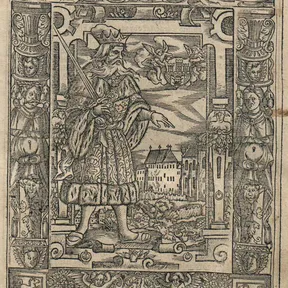
The oldest telling of the Wawel dragon, Kadłubek's, has a crag, no cave and no cobbler. The cobbler Skuba first appears in Bielski's chronicle of 1597.
Biblioteka Jagiellońska, BJ St. Dr. Cim. 8176, cropped CaseBasel, Switzerland, 1474 to 1906
Basel's burned rooster
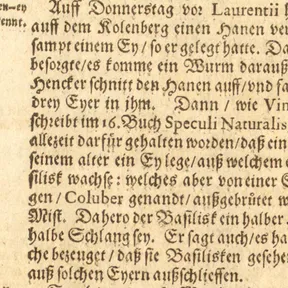
Books say Basel's magistrates sentenced a rooster in 1474. The diary that records the burning names none; the magistrate first appears in a travel book of 1808.
Universitätsbibliothek Basel, UBH EJ IV 28:2, e-rara.ch, cropped TaleThe Dombes, near Lyon, France, 13th century to 20th century
Saint Guinefort, the greyhound in the well
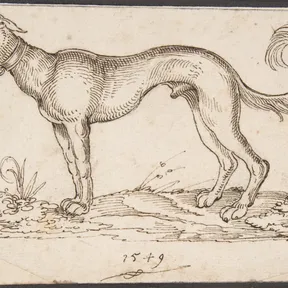
A greyhound killed for saving a child was honoured as a martyr near Lyon. The friar who recorded the cult says he had the dog dug up and its bones burned.
The Metropolitan Museum of Art, 2001.497 TaleVauvert, Paris, France, 1257 to 1882
Where the devil of Vauvert first appears
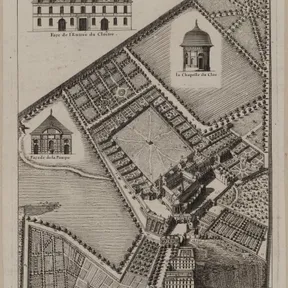
French sends people "au diable Vauvert". The Carthusians took the château in 1257, but the earliest telling of its devil we could read dates from about 1500.
Musée Carnavalet, G.39054 TaleKinderdijk and Dordrecht, Netherlands, 1421 to 2022
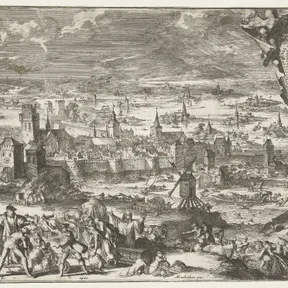
The Kinderdijk cradle and its cat: first ashore at Dordrecht
A baby in a cradle, with a cat keeping it level, is said to have given Kinderdijk its name in 1421. The oldest text we found with the cat names no dike.
Rijksmuseum, RP-P-OB-76.843, cropped TaleHarz and Solling, Germany, 1558 to 1835
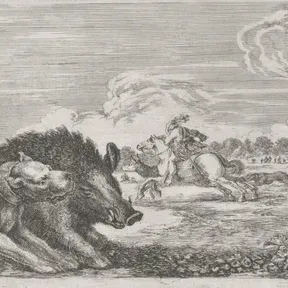
Hackelberg, the wild huntsman, is buried in more than one place
Kirchhof wrote that he found Hackelberg's grave in the Solling in 1558. A Brunswick paper of 1756 reports a stone dated 1581. His identity is not secured.
Rijksmuseum, RP-P-OB-35.014, cropped TaleMoscow, Russia, 1709 to 1934
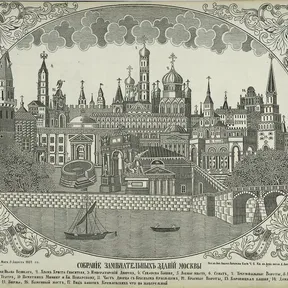
The Sukharev Tower warlock: what Jacob Bruce left on paper
The calendar that carries Jacob Bruce's name says on its first sheet that a librarian, Vasily Kipriyanov, did the work and Bruce only supervised.
The New York Public Library, image 479625 CaseVärend, Småland, Sweden, 1883 to 1889
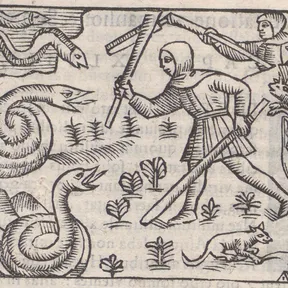
The lindworm reward in Småland was never claimed
In May 1884 a former chargé d'affaires in Småland offered up to 1,000 crowns for a dead lindworm. A Växjö paper joked it had been found; nobody brought a snake.
Uppsala University Library, Westin Sv. hist. Allm. fol. (Ex. 2), cropped TaleEdam and Haarlem, Holland, Netherlands, 1403 to 1786
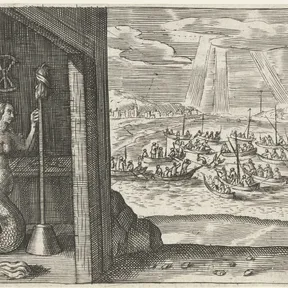
Before the Edam mermaid had a tail
Edam says a mermaid named Minne was caught in 1403 and taught to spin. The chronicles name no one and give no tail; the tail first shows in a print of 1645.
Rijksmuseum, RP-P-OB-78.246, cropped TaleVrhnika (Ober-Laybach), Slovenia, 1684 to 1689
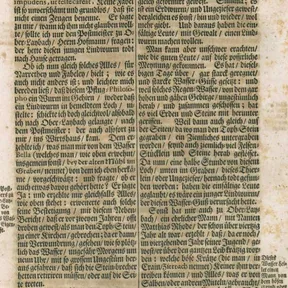
Vrhnika's baby dragons: Valvasor's lizard and the olm
A tourism page says Valvasor wrote of a dragon that spews out its young. His 1689 chapter has one dead, lizard-shaped animal a postmaster hung up for weeks.
National and University Library of Slovenia, dLib.si CaseHermersdorf (Svobodné Heřmanice), Czechia, 1753 to 1768
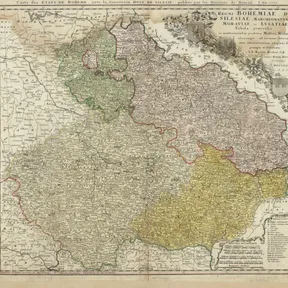
Hermersdorf's vampires were burned before Vienna sent a physician
Maria Theresa's earliest letter we found on the Hermersdorf vampires is dated 8 February 1755, eight days after an executioner burned nineteen of the dead.
Biblioteka Narodowa, Polona, ZZK 1 641 CaseLucerne, Switzerland, 1420 to 2006
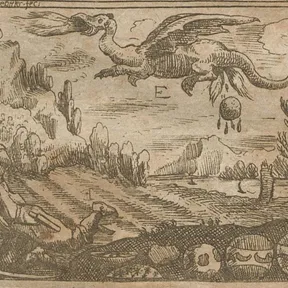
The Lucerne dragon stone: a pledge, a charter and a CT scan
In 1523 Lucerne's council certified a dragon's stone as a cure for plague. In 2006 a CT scan showed a painted clay ball.
Zentral- und Hochschulbibliothek Luzern, e-rara, cropped TaleBretten, Kraichgau, Germany, 1504 to 1816
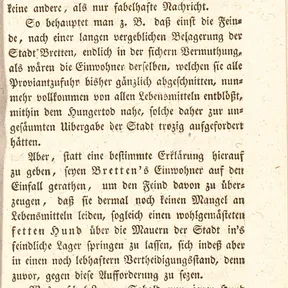
How the dog of Bretten got its siege
Bretten's tailless dog is said to have ended a siege in 1504. The oldest telling, printed in 1805, gives no year, and the real siege ended in a truce.
Badische Landesbibliothek Karlsruhe, O 50 A 379, cropped CaseGévaudan, France, 1764 to 1767
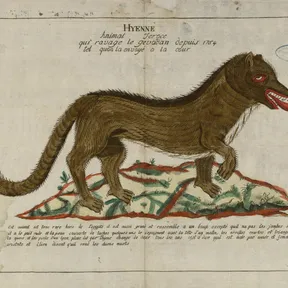
The Beast of Gévaudan outlived the king’s wolf
In 1765 the king's gunbearer shot a wolf, and the Gazette declared the Beast of Gévaudan dead. Five months later a new beast was killing in the same hills.
Archives départementales de l'Hérault, C 44-2, Licence Ouverte CaseKisiljevo and Medveđa, Serbia, 1725 to 1732
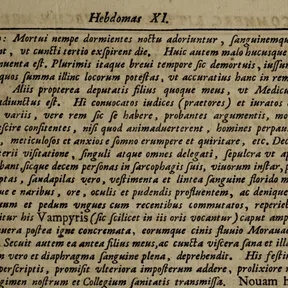
Plogojowitz and Paole: the vampire reports of 1725 and 1732
In January 1732 Habsburg army surgeons had graves opened at Medveđa, cut the bodies open, and signed a report saying which dead were in a "vampire state".
Wellcome Collection CaseBedburg, near Cologne, Germany, 1589 to 1590
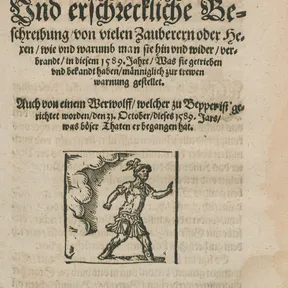
The werewolf of Bedburg in the Cologne papers of 1589
A London pamphlet of 1590 says the werewolf of Bedburg killed two pregnant women. No German text of 1589 mentions them, and no trial record has been found.
ULB Sachsen-Anhalt, Nm 302 (9)