 Twice Told
Places
Japan
TaleKyoto and Obama (Wakasa), Japan, 1449 to 1764
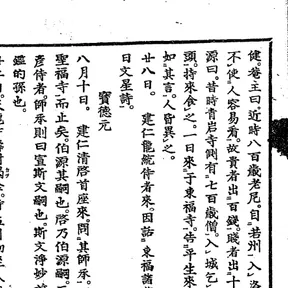
Yao Bikuni, the nun shown in Kyoto in 1449
In 1449 three Kyoto diaries recorded a nun from Wakasa shown for a fee. They disagree on her age and never mention a mermaid, which comes 150 years later.
National Diet Library, call number 69-50, cropped TaleKumano and Saga, Japan, 219 BCE to 1826
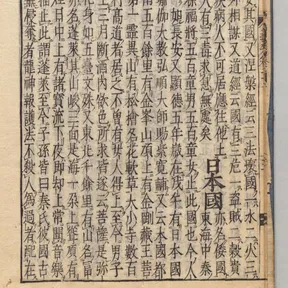
How Xu Fu got to Japan
The Shiji sends Xu Fu to sea for the First Emperor and names no landing. The first text we found that puts him in Japan is a monk's book of the 950s.
国立公文書館所蔵, 310-0158, cropped TaleMusashi (now Tokyo), Japan, 1685 to 1993
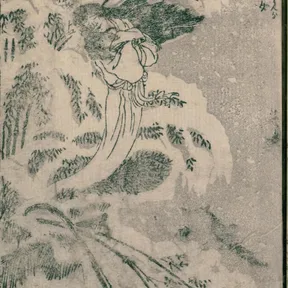
Yuki-onna, the snow woman of Kwaidan, 1904
Hearn said a farmer of Chōfu told him the tale of the snow woman who marries. Tōda traces the Japanese folktale versions back to Hearn's English.
National Diet Library, call number 辰-23, cropped TaleYotsuya, Edo (now Shinjuku, Tokyo), Japan, 1727 to 1952
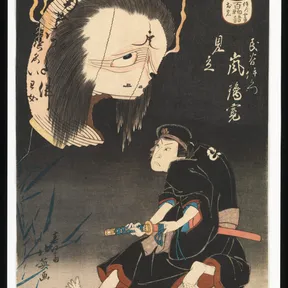
Oiwa of Yotsuya was divorced in the old text and drugged on the stage
Shinjuku City says the real Oiwa and her husband got on well. The old Yotsuya text has him divorce her, and Nanboku's 1825 play has a drug ruin her face.
The Metropolitan Museum of Art, 2011.135 TaleHitachi (now Ibaraki), Japan, 1803 to 2026
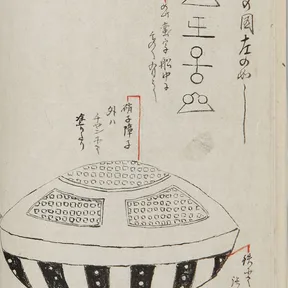
Where the Utsuro-bune landed depends on the text
Fourteen old texts tell of a round vessel and a woman with a box on a Hitachi beach in 1803. The beach named in the Toen-kai text appears in no Edo record.
国立公文書館所蔵, 弘賢随筆 特095-0004, cropped TaleŌtemachi, Tokyo, 940 to 2020
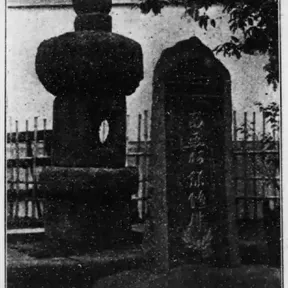
Masakado's head mound in Ōtemachi: a curse in print by 1926
Office towers ring a Tokyo mound said to hold Taira no Masakado's head. The earliest column we found tying it to officials' illnesses is from December 1926.
National Diet Library, 515-17, cropped TaleMiyoshi, Hiroshima, Japan, 1749 to 1859
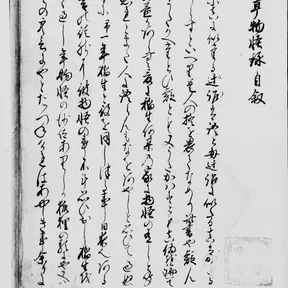
The Inō mononoke roku: where the demon king's mallet came from
In 1749 a demon king is said to have given a sixteen-year-old in Miyoshi a mallet. A comparison of four versions shows none in the text dated 1783.
University of Tokyo General Library, A00-5594, cropped CaseShimoda, Izu, Japan, 1884 to 1891
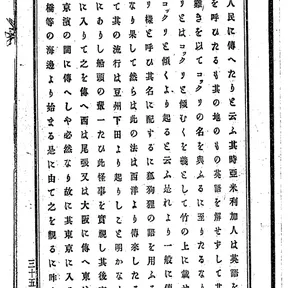
Kokkuri-san came ashore at Shimoda, or so Inoue Enryō heard
In 1887 Inoue Enryō traced the kokkuri craze to an American ship at Shimoda, a story he dated to about 1884 in one book and about 1885 in the next.
National Diet Library, 妖怪玄談 (1900), p. 35, cropped TaleHanyū, Shimōsa (now Jōsō, Ibaraki), Japan, 1672 to 1859
Kasane's spirit left Hanyū village twice
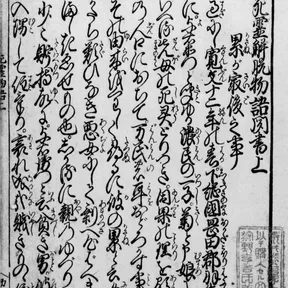
In 1672 a Shimōsa village freed a girl from Kasane's spirit with its own nenbutsu, and the spirit came back. Only then, the one account says, did Yūten come.
「死霊解脱物語聞書」(東北大学附属図書館所蔵), 4/11444/2, cropped TaleAkamagaseki (now Shimonoseki), Japan, 1782 to 1957
Hōichi the Earless was “ear-cut” in the book Hearn owned
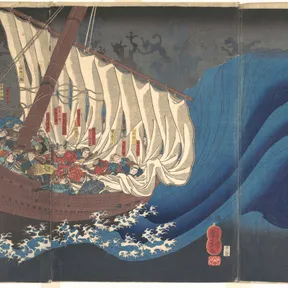
The samurai in Hearn's Hōichi calls out "Kaimon!" at the gate. In the 1782 book Hearn owned he says only "open", and the player is "ear-cut", not earless.
The Metropolitan Museum of Art, JP1565 CaseAsakuchi, Okayama, Japan, About 1736 to 2023
Enjuin's mermaid mummy is younger than its box paper says
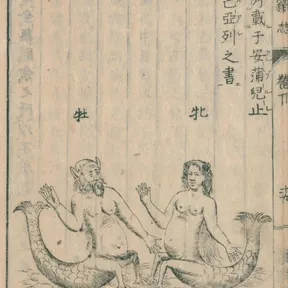
A paper in the box says a net off Tosa caught the mermaid in the 1730s. Radiocarbon on its scales says the 1800s, and the paper itself records a sale in 1906.
National Diet Library, 特1-104, cropped TaleHigo (Kumamoto), Japan, 1843 to 1882
Amabie, from a single news sheet of 1846
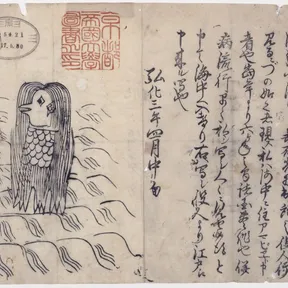
In 1846 a news sheet drew a long-haired sea creature from Higo and named it Amabie. Every other known paper about the creature calls it amabiko.
Main Library, Kyoto University, RB00000122, cropped TaleNasu, Tochigi, Japan, About 1400 to 2022
The killing stone of Nasu and a fox with two tails
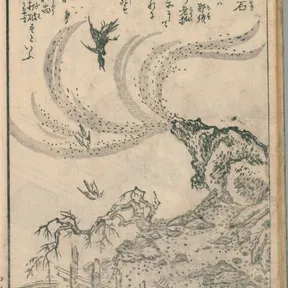
The killing stone at Nasu split in two in March 2022. In the oldest written versions of its legend, the fox has two tails, not nine.
National Diet Library Digital Collections TaleHimeji, Hyōgo, Japan, About 1577 to 1952
How Okiku came to Himeji Castle’s well
Himeji Castle shows visitors the well Okiku is said to lie in. The oldest version of her story has no Okiku, no plates and no well.
Kobe University Library, 地理-22-1, cropped