 Twice Told
Masakado's head mound in Ōtemachi: a curse in print by 1926
Office towers ring a Tokyo mound said to hold Taira no Masakado's head. The earliest column we found tying it to officials' illnesses is from December 1926.
Contents
Published 12 Oct 2026. Sources checked 15 Oct 2026.
The National Tax College tells it in a few lines. After the great earthquake of 1923, when the Finance Ministry rebuilt on its old ground, the mound of Taira no Masakado was broken up.8 In 1926 the finance minister Hayami Seiji died suddenly, and Yabashi Kenkichi, the engineer who headed the works section, died the next year.910 Rumours of a curse followed, the page says, and it adds that no one can show the curse was real.117 In June 1940 lightning struck a neighbouring ministry and the fire reached the Finance Ministry.12 After the war, it says, American forces tried to level the site and a bulldozer overturned, killing its driver.7 The mound is still there.13
This is the story as it is told today, by the society that looks after the mound, the ward’s tourism page and the National Tax College.14157
After Taira no Masakado lost the battle, his head was hung at the prison gate in Kyoto.14 One night it gave off a white light, flew east, and fell at Shibasaki in Musashi.14 The sound rolled over the Kantō for three days and three nights.14 The people washed the head in a nearby well, made offerings at a Kannon hall, built a mound over it, and the curse went quiet.14
Much later the Finance Ministry stood on that ground. After the earthquake of 1923 the mound was broken up, and the deaths of its officials were put down to a curse.811 After the war American forces came to clear the burnt-out site. A bulldozer rolled over and killed its driver, and the mound was left standing.76
What stands there now
The mound is at Ōtemachi 1-2-1, in Chiyoda ward, in a gap between office buildings.13 Chiyoda ward’s tourism site and the society that keeps the mound give the address, Kanda Myōjin places the mound at Ōtemachi, and both the shrine and the society call it a Tokyo-designated site.13 The society says Tokyo’s Board of Education notified it on 1 April 1971 that the mound had been designated on 29 March.16 The society was formed in July 1960, and its by-laws provide for a rite at the mound each September.17 Kanda Myōjin’s timeline says the mound’s sixth refurbishment was finished in 2020.18
At the Kanda festival, the society says, the shrine’s portable shrine was always set down in front of the mound for an offering, in Edo, after the Meiji restoration, and still after the war.19
What the oldest texts say about the head
The Shōmonki tells the war in the east. It says Masakado was struck by an arrow in the second month of 940.1 It also dates the report of his head to the capital, 25 April.2 Fujiwara no Tadahira’s diary, the Teishin-kōki, has an entry of the same day, quoted in the Kojiruien, saying the news of Masakado’s head had come, although the character after “head” is printed as a box that may mark a gap.2
The Shōmonki makes no mention of a flight. Kajiwara Masaaki, writing in the Sekai daihyakka jiten, says it ends with a rumour that Masakado in hell sent word of his torments to his family, and that the Taiheiki and old-print Heiji monogatari tell of a head that would not close its eyes.20
The Taiheiki, a war tale, gives the head a long paragraph in its sixteenth book. The head is hung at the prison gate, its colour does not change for three months, and every night it calls for its body. A passer-by makes a verse, the head laughs, and its eyes close.3 It does not leave Kyoto.
斬られし我五體、何の處にか有らん。此に來れ。頭續て今一軍せん3
“Where can my body be, the one that was cut off? Come here. Join on my head and I will fight one more battle.”
The first flying head, 1662
Edo meishoki, a guidebook of 1662 by Asai Ryōi, has the head fly.4 In its chapter on Kanda Myōjin, Hidesato strikes Masakado down by a ruse and the head goes up into the sky and into the clouds, then comes to rest at the shrine’s place.4 The head is then sent to the capital and hung at the prison gate, where it curses until someone makes the Taiheiki’s verse and it laughs.421 A shrine is built at the place to calm it.4
A book of 1687, Kokyō-gaeri no Edo banashi, tells it differently. In its chapter on Kanda Myōjin the head flies and is shot down in Mino by the mountain god of Nangū, and the body is what comes to Musashi.22 The enlarged edition of 1694, as Oda Kanshi quotes it in 1907, has lights appearing and the ground shaking, so the governor reports to the capital and the head is sent down and buried with the body.23 That ground is where Kanda Myōjin was said to have begun.23
その首とんで空にあがり、雲に入りしが、此處におちとゞまりし4
“His head flew up into the sky and went into the clouds, and it came to rest and stayed at this place.”
Oda gives no credit to any of it. He calls the stories absurd and thinks Masakado’s remaining followers tried to take the head back, and at last asked for it from Kyoto and buried it with the body at Shibasaki.24 Yada Sōun, writing in 1924, tells the same plain version: followers carried the body to Shibasaki and the head was fetched from Kyoto later.5 The society’s text of 1972 and the ward’s tourism page have the head fly east, and Oda reports that Torigoe Shrine is said to stand on the hill the head flew over.141524
Who tended the mound at Shibasaki
The ground where the Finance Ministry later stood was Shibasaki village.25 Nichirin-ji, a temple there, tells how Masakado’s spirit was blamed for illness and early deaths until the Jishū priest Taa Shōnin held a service and gave him a Buddhist name.26 The sources we read date that service between 1303 and 1307.27 The society’s page prints 1303; the temple’s report, quoted by Oda, has the slab stupa raised in 1307.27 Kanda Myōjin dates Masakado’s enshrinement beside the temple to 1309 and the shrine’s move to its present site to 1616.28
Masakado came out of Kanda Myōjin’s main hall in the 1870s, and the shrine says he went back in 1984.2930 Oda, writing in 1907, calls the earlier removal a mistake.29
The mound inside a daimyo’s courtyard
In Edo times the mound lay in the courtyard of Doi Ōinokami’s compound and then Sakai Utanokami’s.31 Oda says that under the Sakai house the shrine on it was called Masakado Inari, and that in alternate years under the fourth shogun the Kanda festival’s portable shrine was carried into the compound.32 After the domains were abolished in 1871, the Finance Ministry stood on Sakai’s old ground.33
By 1906 a preservation stone stood in the ministry’s garden, raised under the finance minister Sakatani Yoshirō.34 A photograph book of 1914 shows the stone and the mound.34 Fujisawa Morihiko printed his own photograph of the mound in 1925.35
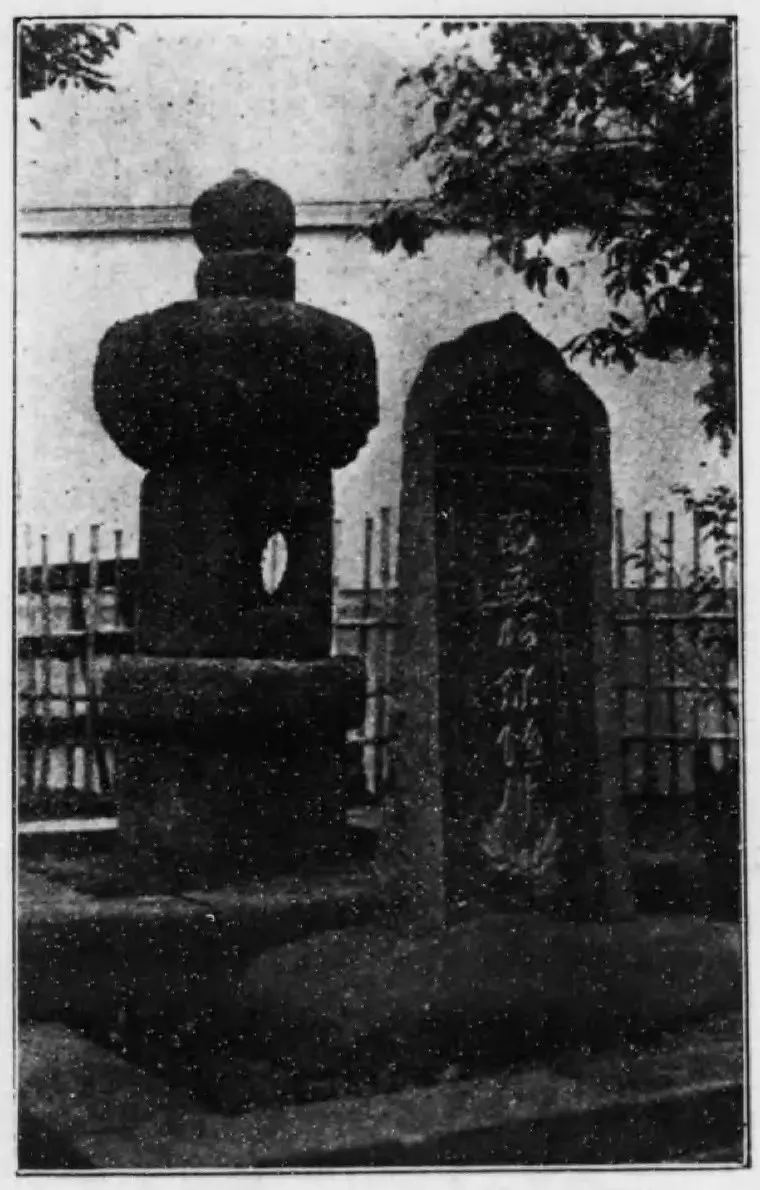
The head mound inside the Finance Ministry, captioned 平将門首塚 (著者写真), “photograph by the author”, fig. 63 in Fujisawa Morihiko, Nihon densetsu kenkyū vol. 2 (Daitōkaku, 1925), p. 294, cropped. National Diet Library Digital Collections, call number 515-17, public domain.
The society says the ministry’s secretariat looked after the mound after the restoration, and credits Shibusawa Eiichi’s efforts for its survival.36
The ministry’s courtyard, 1923 to 1928
After the earthquake of 1923 burned the building, the National Tax College says the mound was broken up in 1924 when a temporary building went up.8 Yada, writing the same year, saw it bare to the street after the fire.37 Other sources keep it standing: a city survey of 1932 and a ward history of 1935 still list the mound in the ministry’s grounds.38 Kanda Myōjin says a new stone was raised in 1936 after the quake had cracked the old one.39 We cannot tell from these what stood on the site in each year.
A column of 10 December 1926 in the Osaka Asahi, reprinted in a book of 1927, links the mound to the ministry’s troubles.40 It lists the finance minister’s death, a vice-minister’s illness and others’ injury, and says the finance minister Kataoka took it to be because the mound was not honoured, and that he would build a shrine and hold a Masakado festival.40
大藏省構內の將門首塚を祀らぬためと、片岡藏相がかつぎ40
Finance Minister Kataoka takes it that this is because the Masakado head mound inside the Finance Ministry was not honoured.
The minister who had died, Hayami Seiji, had become finance minister on 3 June 1926 and died on 13 September, a little over a hundred days later.41 The Rekidai zōshō-den of 1930 says illness kept him shut in for most of the term.41
On 27 March 1928 the ministry held a Shinto service in its second dining hall, with a priest of Kanda Myōjin officiating, and planned a Buddhist service at Nichirin-ji for 14 April.42 The Tokyo Asahi item of that day says that after a run of deaths in post and illnesses, the staff agreed it seemed to be Masakado’s vengeful spirit.43 It says the mound was stamped down under the budget bureau’s barracks after the earthquake.43 It names the minister and Yabashi, and counts a dozen or so others.10 A report printed after it in a booklet of 1928, credited to the Hōchi shimbun, says fourteen people had died so far, listing the finance minister and Yabashi first.44 Its credit line gives 15 March 1928, twelve days before the service it goes on to describe.4445
By the Hōchi report’s telling, the talk began after the barracks went up over the mound, and a former finance minister, shaken by it, had meant to hold a service in spring.4647
The memorial year, the fire, then the bulldozer
In 1940, the thousand-year memorial of Masakado’s death, Kanda Myōjin and Nichirin-ji held a service at the Planning Board’s grounds in Ōtemachi.39 The society says the ministry copied Taa Shōnin’s slab stupa for the occasion.39 That June lightning struck the Communications Ministry’s Aviation Bureau at Ōtemachi, and the fire spread to the Finance Ministry and others.12 The fire museum’s page gives the cause as lightning on the bureau’s chimney, with a faulty earth on the lightning rod.12
The bulldozer story has two tellers. The National Tax College says a bulldozer overturned and its driver died when American forces tried to level the mound.7 The society’s page, an excerpt from its late president Endō Tatsuzō, written in 1972 by its own dating, adds that the neighbourhood association head Endō Masazō knew the mound and petitioned MacArthur’s headquarters, calling it “the grave of a great chief of old”.6 The page gives no year for the incident.6 We found no document of the 1940s that records it.76
| The story | The record | Verdict |
|---|---|---|
| The finance minister died three years after the mound was disturbed | Died 13 September 1926; the mound broken up in 1924, or after the 1923 quake9843 | Disputed |
| The 1940 fire began with lightning on another building | Lightning on the Aviation Bureau12 | Confirmed |
| The head flew to Ōtemachi | Taiheiki: stays in Kyoto; first flight we found: 166234 | Unsupported |
| The curse began with the 1923 demolition | A column of December 1926 blames neglect of the mound40 | Unsupported |
| A bulldozer overturned and killed a driver | Told in 1972 and by the NTA; no record of the time found76 | Unsupported |
The society says the thousand-and-thirty-third memorial service at Nichirin-ji was held on 14 February, which it gives as Masakado’s death day.48 The Shōmonki’s own date is the 14th of the second month, and the 1928 item says the temple’s register gave the 14th of the fourth month.14847
What we could not verify
Sources we have not seen
- The Tokyo Asahi of 27 March 1928 (evening, p. 2) and the Hōchi report, in the original: the Asahi archive and Yomidas are behind paywalls and we did not find either in NDL Digital Collections. We read the Asahi item only as Tsukuda reprinted it.43
- Tokyo’s cultural-property database record for the mound: its host did not resolve from our connection on 15 October 2026.
- Ukai Hidenori’s 2018 account of the bulldozer, which Japanese Wikipedia cites; we could not find the article online.
Seen only where others quote them
Resting on a single source
- The count of fourteen dead appears only in the Hōchi report as reprinted in Tsukuda’s booklet, which lists the minister and Yabashi first; we found no list of the others.44
Questions we could not settle
- Whether anything printed before December 1926 ties the mound to the ministry’s deaths; we found nothing.
- Whether anything older than Edo meishoki of 1662 has the head fly, and when the bulldozer story began.
- What stood on the site between 1924 and 1936.
Read next
CaseAsakuchi, Okayama, Japan, About 1736 to 2023
Enjuin's mermaid mummy is younger than its box paper says
TaleNasu, Tochigi, Japan, About 1400 to 2022
The killing stone of Nasu and a fox with two tails
TaleKyoto and Obama (Wakasa), Japan, 1449 to 1764
Yao Bikuni, the nun shown in Kyoto in 1449
Sources
- Shōmonki, Shinpukuji manuscript, facsimile (Koten Hozonkai, 1924), NDL frame 52 (leaf near the end of the battle): 十四日未申尅、彼此合戰...; frame 53, third line from the right: 新皇...中神鏑 (primary)
- Fukuda Toyohiko, entry 平将門, Sekai daihyakka jiten (Heibonsha), via Kotobank, Section 平将門: 940年2月に藤原秀郷と国香の子平貞盛らに討たれ,梟首された; section 人物像の形成と展開 (Kajiwara): 神鏑に射すくめられて死んだ
- Shiseki Masakado-zuka Hozonkai, 歴史 (chronology), Entry 2月14日, 天慶3年 940: 北山に陣して平貞盛の軍と交戦。激戦ののち神鏑に射られ戦死する↑
- Shōmonki, Shinpukuji manuscript, facsimile (1924), NDL frame 53, last column on the left page: 同年四月廿五日、其頸言上 (primary)
- Teishin-kōki (diary of Fujiwara no Tadahira), as quoted in Kojiruien, 法律部二 (Jingūshichō, 1902), under 梟首, p. 241 (NDL frame 10, last lines of the left page): 〔貞信公記〕天慶三年四月廿五日、右大辨來告將門首□來狀; the character before 來 is printed as 口 and may be a lacuna mark
- Shiseki Masakado-zuka Hozonkai, 歴史 (chronology), Entry 4月25日, 天慶3年 940: 将門公の御首、藤原秀郷により京都に届けられ東市に梟首↑
- Taiheiki, vol. 1 (Yūhōdō, 1922), book 16, "Nihon chōteki no koto", p. 553 (NDL frame 285, left page, from 是のみならず, line 5 of the page, to the end of the page) (primary) transcription
- Kajiwara Masaaki, entry 平将門, Sekai daihyakka jiten, Section 人物像の形成と展開, fourth paragraph: 都で梟首された将門の首が瞑目せず、歯がみして復仇を誓った↑
- Asai Ryōi, Edo meishoki vol. 1, ch. 10 (Kanbun 2 [1662]), as printed in Edo sōsho vol. 2 (Edo Sōsho Kankōkai, 1916), pp. 15 to 16 (NDL frames 16 and 17): その首とんで空にあがり、雲に入りしが、此處におちとゞまりしを、都にのぼせて獄門の木にかけられしに (primary) transcription↑
- Oda Kanshi, 平将門故蹟考 (1907), p. 1 of the main text (NDL frame 8, left page, from 其の遺骸を): 其の遺骸を武州豐島郡に舁き來り潜に芝崎村日輪寺境內に瘞めたり、後に首級を京師より請得て持歸り此に併せ葬る
- Yada Sōun, 熱灰を踏みつゝ (1924), p. 141 (NDL frame 81, left page, first lines): 郞黨が胴體をかついで來て武州芝崎村日輪寺境内に葬り、程經て京都から首を取寄せて併せ葬つた↑
- Shiseki Masakado-zuka Hozonkai, 保存会について, Sections 敗戦後, 将門首塚, 大酋長の墓; closing note: 故前将門塚保存会会長 遠藤達蔵氏文献より抜粋; section 神田祭 dates the text: 本年(昭和四十七年)↑
- National Tax College (国税庁税務大学校), 税の歴史クイズ「大手町の首塚」, Last paragraph of the answer: 太平洋戦争後、米軍が塚を整地しようとした時にブルドーザー横転事故が起きて運転者が亡くなっています; same paragraph: 大蔵省に関わる祟りが事実か否かは確かめようもありません
- Shiseki Masakado-zuka Hozonkai, 保存会について, text attributed to the late president Endō Tatsuzō, Section 将門首塚: ブルドーザーが横転し、運転手は投げ出されて...病院に運ばれたがまもなく死亡した↑
- National Tax College, 大手町の首塚, Answer, third paragraph: 大正12(1923)年の関東大震災で焼失し、翌年、跡地に仮庁舎を建てる際に首塚が壊されました
- Tokyo Asahi, 27 March 1928, as printed in Tsukuda, 将門公正伝 (1928), item 24, p. 68 (NDL frame 45, right page),: 震災後バラックを建てる時に、首塚を今の主計局の縁の下にたゝき込んで transcription↑
- National Tax College, 大手町の首塚, Answer, fourth paragraph: 大正15(1926)年、第一次若槻礼次郎内閣で大蔵大臣であった早速整爾(1868〜1926)が突然亡くなり
- 歴代蔵相伝 (Tōyō Keizai Shinpōsha, 1930), chapter 16 早速整爾の巻, p. 259 (NDL frame 140, left page): 大正十五年九月十三日、時の大蔵大臣たる早速整爾が...死せず
- Shaku Hyōsai, 天声人語 (Ginkō Mondai Kenkyūkai, 1927), column of 10 December 1926, p. 184 (NDL frame 101, right page): 早速蔵相の死↑
- National Tax College, 大手町の首塚, Answer, fourth paragraph: 管財局技師で工事部長だった矢橋賢吉(1869〜1927)が亡くなり
- Tokyo Asahi, 27 March 1928, as printed in Tsukuda, 将門公正伝 (1928), item 24, p. 67 (NDL frame 44, left page, last columns): 早速藏相、矢橋營繕管財局工務課長その他十數人が現職のまゝでなくなつて行く↑
- National Tax College, 大手町の首塚, Answer, fourth paragraph: 続けて不幸があったため、仮庁舎建設に際する祟りが噂されるようになり、昭和2(1927)年に鎮魂碑を立てたといわれています↑
- Tokyo Fire Department, 雷の観測機器を焼いた落雷, Third paragraph under the heading photo caption: 昭和15(1940)年6月20日...逓信省航空局の建物に落雷があって火災となり、類焼したもの...大蔵省、企画院、厚生省、東京営林局、神田橋税務署
- Fire and Disaster Management Agency, Fire and Disaster Management Museum, 主な大火: 大手町官庁街の火災, 昭和15年6月20日...午後10時1分ごろ、麹町区大手町の逓信省航空局新館から出火。原因は、逓信省航空局の30mの煙突に落雷し...; damage list begins 大蔵省、企画院、中央気象台
- National Tax College, 大手町の首塚, Last paragraph: 昭和15(1940)年6月には、落雷による大蔵省庁舎焼失を含む大手町官庁街の火災が起こり↑
- Kanda Myōjin, "Profile" page, Section 平将門命: 東京都千代田区大手町・将門塚(東京都指定文化財)には将門公の御首をお祀りしております
- Visit Chiyoda (Chiyoda ward's official tourism site), 将門塚, Basic information: 所在地 千代田区大手町1-2-1; text: 大手町駅徒歩3分
- Shiseki Masakado-zuka Hozonkai (society that keeps the mound), 保存会について, Page title 東京都千代田区大手町1-2-1; section 東京都文化財の指定: 将門首塚は都条例により文化財(都旧跡)に指定された↑
- Shiseki Masakado-zuka Hozonkai, 保存会について, Section 将門公の首級: 一夜白光を放って東方に飛び去り、武蔵国豊島郡柴崎に落ちた↑
- Visit Chiyoda, 将門塚, Paragraph 語り継がれてきた逸話: 平将門の首は怨念により故郷の東国に向かって飛んでいき、その途中の土地土地に落ちた↑
- Shiseki Masakado-zuka Hozonkai, 保存会について, section 東京都文化財の指定, Reproduces notice 46教社文発第九号: 昭和四十六年三月二十九日付をもって東京都文化財に指定↑
- Shiseki Masakado-zuka Hozonkai, 保存会について, Section 保存会の結成: 昭和三十五年七月、正式に「史蹟将門塚保存会」が結成された; by-laws, article 4: 毎年九月 塚前祭・例祭↑
- Kanda Myōjin, 神田明神1300年事業 HISTORY, Entry 史蹟将門塚、第6次改修工事が完成, before 令和3年(2021)↑
- Shiseki Masakado-zuka Hozonkai, 保存会について, Section 神田祭: 巡幸の途次、必ず大手町の将門塚に至り、塚前にすえられ、奉幣の義が行われた↑
- Kajiwara Masaaki, entry 平将門, Sekai daihyakka jiten (Heibonsha), via Kotobank, Section 人物像の形成と展開, fourth paragraph: 《将門記》は、その文末に...冥界から消息を寄せて...《太平記》や古活字本《平治物語》には、都で梟首された将門の首が瞑目せず、歯がみして復仇を誓ったという話↑
- Asai Ryōi, Edo meishoki vol. 1, ch. 10 (Edo sōsho reprint, 1916), pp. 15 to 16 (NDL frames 16 and 17) (primary) transcription↑
- Kokyō-gaeri no Edo banashi, 6 vols (Kagiya Heiemon and others, Jōkyō 4 [1687]), vol. 2, NDL frame 4, left page, columns on 南宮の山神 and 美濃國 and 首を射; frame 5, right page, first columns (むくろ, the lights and tremors, 神田) (reading of these running-kana pages is partial; documents/ not made) (primary)↑
- Oda Kanshi, 平将門故蹟考 (1907), quoting Zōho Edo banashi, p. 12 (NDL frame 17, right page, from 增補江戶咄に云く to the end of the quotation) transcription
- Tōkyō shishi-kō, shūkyō-hen vol. 1 (Tokyo city, 1932), quoting 增補江戶咄 under 神田社, p. 658 (NDL frame 356, right page, first lines; the quotation begins mid-sentence at せいき盡てたをれける)↑
- Oda Kanshi, 平将門故蹟考 (1907), p. 13 (NDL frame 17, left page, first lines): 鳥越神社は將門の首飛越たる山なりとの俗傳あり...荒唐たる俗説の斯く種々に傳はれるもの、思ふに將門の餘黨各處に於て其の首を奪ひ返さんと謀りしものならん transcription↑
- Oda Kanshi, 平将門故蹟考 (1907), p. 4 (NDL frame 13, right page, middle): 長祿年間江戶起立圖を按するに芝崎村は今の大藏省內務省の處に當れり
- Tokyo Asahi, 27 March 1928, as printed in Tsukuda, 将門公正伝 (1928), item 24, p. 68 (NDL frame 45, right page): 今の大藏省敷地は、元神田明神と淺草日輪寺のあつた所で transcription↑
- Oda Kanshi, 平将門故蹟考 (1907), quoting the temple's report to the shogunate, pp. 8 (NDL frame 15, right page, first four lines): 亡靈の崇り甚しく病災夭折枚擧に遑あらず...靈魂の崇り退き死に向ひたるもの悉く快復す (cited in Oda; the report itself unseen)
- Shiseki Masakado-zuka Hozonkai, 保存会について, Section 神田山日輪寺: 疫病が蔓延し、住民が難渋し、将門公の祟りであると恐れおののいていた...疫病も終息したという
- Kōjimachi-ku-shi (1935), p. 285 (NDL frame 198): 上人の供養によつて崇りをしなくなつたといふ↑
- Shiseki Masakado-zuka Hozonkai, 保存会について, Section 神田山日輪寺: 喜元(一三〇三)の年、時宗二世、他阿真教上人...(the page's 喜元 is a miswriting of 嘉元)
- Oda Kanshi, 平将門故蹟考 (1907), Inoue's preface, NDL frame 3: 及嘉元二年、遊行眞教上人停錫、改時宗芝崎道塲...建版碑
- Oda Kanshi, 平将門故蹟考 (1907), quoting the temple's report to the shogunate, p. 8 (NDL frame 15, right page, from the fourth line): 嘉元三年遊行二世眞教上人東國遊化の時...德治二年丁未に親書し版碑に刻み(cited in Oda from Gofunai bikō zokuhen, vol. 9; not independent of that report)
- Kanda Myōjin, 神田明神1300年事業 HISTORY, Entry before 徳治2年(1307): 時宗の真教上人、将門公の霊を化導し蓮阿弥陀仏の法号を授け板碑を建立する
- Kōjimachi-ku-shi (1935), p. 285 (NDL frame 198, left page): 眞教上人が後二條天皇の嘉元年中...時宗の念佛道場としたもの↑
- Kanda Myōjin, "Profile" page, Sections 平将門命 and 神田明神の歴史: 延慶2年(1309)にご奉祀; 元和2年(1616)...現在の地に遷座
- Kanda Myōjin, 神田明神1300年事業 HISTORY, Entry 平将門公をご祭神として合祀 before 延慶2年(1309)
- Shiseki Masakado-zuka Hozonkai, 保存会について, Section 将門首塚の管理: 日輪寺の記録によると、真教上人は延慶二年(一三〇九)...神田明神と改称; 元和二年(一六一六)↑
- Oda Kanshi, 平将門故蹟考 (1907), pp. 76 to 77 (NDL frame 49): 明治七年には將門主靈神を斥けて攝社とし...(Oda calls the change a mistake)
- Kanda Myōjin, "Profile" page, Section 平将門命: 明治7年(1874)に一時、摂社・将門神社に遷座されましたが
- Kanda Myōjin, 神田明神1300年事業 HISTORY, Entries before 明治5年(1872) (仮遷座 into the Ōkuninushi shrine) and 明治9年(1876) (将門神社竣工)↑
- Kanda Myōjin, "Profile" page, Section 平将門命: 昭和59年に再びご本殿に奉祀され今日にいたっております↑
- Oda Kanshi (織田完之), 平将門故蹟考 (Hibun Kyōkai, 1907), p. 4 (NDL frame 13, right page, first lines) and pp. 12 to 13 (frame 17, left page, last lines: 土井大炊頭邸)
- Yada Sōun, 熱灰を踏みつゝ (1924), p. 140 (NDL frame 81): 土井大炊の屋敷を酒井雅楽頭に賜わつた; p. 141: 将門首塚わその御守殿の一隅に在つた
- Shiseki Masakado-zuka Hozonkai, 保存会について, Section 将門首塚の管理: 塚は土井大炊頭の屋敷の内になり、以後江戸時代三百年間、この地に屋敷を賜つた大名の管理↑
- Oda Kanshi, 平将門故蹟考 (1907), p. 4 (NDL frame 13, right page, middle): 酒井雅樂頭の頃は將門稻荷社と唱へ...四代將軍嚴有院の頃隔年九月十五日神田大明神の大祭には...神輿を此の邸內に昇入れ奉幣の式あり↑
- National Tax College, 大手町の首塚, Answer, third paragraph: 大蔵省は神田橋内の旧姫路藩酒井雅楽守邸跡に庁舎を置きますが、かねてよりここには将門の首塚がありました
- Yada Sōun, 熱灰を踏みつゝ (1924), p. 140 (NDL frame 81, right page, lower lines): 四代将軍の頃土井大炊の屋敷を酒井雅楽頭に賜わつた...今度焼けた大蔵省及び内務省がその邸趾であつた↑
- Oda Kanshi, 平将門故蹟考 (1907), Inoue Yorikuni's preface dated 1906, NDL frame 3, preface, from 大藏省庭前、老樹森立中、有古墳墓: 大藏大臣正四位法學博士阪谷芳郞、植故蹟保存碑
- Kanda Myōjin, 神田明神1300年事業 HISTORY (timeline), Entry before the line 明治39年(1906): 織田完之・阪谷芳郎らにより大蔵省構内神田神社旧蹟地・将門塚に故蹟保存碑建立
- Togawa Zanka (戸川残花), ed., 東京史蹟写真帖 (Gahōsha, 1914), NDL frame 14, plate of five photographs, captions 芝崎道場跡 将門首塚 and 大蔵省構内保存碑; p. 10 (frame 20): 平親王と僞稱せし將門の首塚は昔の芝崎道場今の大藏省のお庭↑
- Fujisawa Morihiko (藤沢衛彦), 日本伝説研究 vol. 2 (Daitōkaku, 1925), p. 294 (NDL frame 168, right page), fig. 63 (photograph of a stone lantern and a tall monument inside a bamboo fence, captioned 著者写真) and text: 將門の首は...東京麴町大藏省内にある將門塚に瘞められたとするのが傳說に隱當であらうと思はれる↑
- Shiseki Masakado-zuka Hozonkai, 保存会について, Section 敗戦後: 明治維新後の将門塚の管理は大蔵省大臣官房によって行われていた...故渋沢栄一翁の尽力によると伝えられている↑
- Yada Sōun (矢田插雲), 熱灰を踏みつゝ (Asakaya Shoten, 1924), p. 26 (NDL frame 24, right page, first column): 大蔵省もまる焼けになり、大蔵省の将門首塚わ往来えむき出しに見えて居る↑
- Kōjimachi-ku-shi (Kōjimachi ward history, Tokyo city, 1935), p. 285 (NDL frame 198, left page, near the end of the paragraph on Nichirin-ji): 上人の供養によつて崇りをしなくなつたといふ將門塚は大藏省構內に殘されてゐる
- Teito fukkō kukaku seiri-shi (Tokyo city, 1932), vol. 3 part 2, p. 222 (NDL frame 310, right page, the only paragraph): 大手町一丁目大藏省構內の將門塚...何れも史蹟及傳說地なり↑
- Kanda Myōjin, 神田明神1300年事業 HISTORY, Entries before 昭和11年(1936) (将門塚の故蹟保存碑、大震災により亀裂損傷のため新たに建立) and before 昭和15年(1940) (...平将門公一千年慰霊祭・供養式を大手町企画院構内で斎行)
- Shiseki Masakado-zuka Hozonkai, 保存会について, Section 敗戦後, 将門首塚: the slab stupa was copied from Taa Shōnin's itabi by the Ministry for the 1940 thousand-year festival (昭和十五年の将門公壱千年祭に大蔵省が、真教上人の板碑を模刻)↑
- Shaku Hyōsai, 天声人語 (Ginkō Mondai Kenkyūkai, 1927), column "Kushi busshō ari" of 10 December 1926, p. 184 (NDL frame 101, right page, last four columns); the book's preface (frame 4, dated 31 March 1927) says it collects columns from the Osaka Asahi, and its contents (frame 8, p. 6, under Taishō 15, twelfth month) lists 十日 狗子佛性あり at p. 184 transcription↑
- 歴代蔵相伝 (1930), chapter 16, p. 259 (NDL frame 140, left page): 大正十五年六月三日; 同年九月十三日; 在任僅かに百餘日; 病氣の爲め引籠りし↑
- Tokyo Asahi, 27 March 1928, as printed in Tsukuda, 将門公正伝 (1928), item 24, pp. 67 to 68 (NDL frames 44 and 45): 二十七日午後四時省内第二食堂を祭場とし...更に來月十四日には...日輪寺で法要 transcription
- Osaka Municipal Central Library, reference record 10-2C-200710-01, Reference Collaboration Database (NDL), Answer: 「朝日新聞縮刷版 昭和3年3月」...3月27日夕刊2面に「将門の霊よこの通り謝る」の記事
- Kanda Myōjin, 神田明神1300年事業 HISTORY, Entry before 昭和3年(1928): 大蔵省構内で平将門公御霊の慰霊祭が斎行↑
- Tokyo Asahi, 27 March 1928, as printed in Tsukuda, 将門公正伝 (1928), item 24, pp. 67 to 68 (NDL frames 44 and 45): どうも是は將門の怨靈のせいらしいと衆議が一致した transcription↑
- Tsukuda Yojirō (佃与次郎), 将門公正伝 (Tsukudo Jinja Shamusho, 1928), p. 70 (NDL frame 46, right page, lines 10 to 14 from the right): 死亡したものが今日まで十四人; 時の政務次官...一時は足を怪我せぬ者はない程であつた; credit on p. 72 (frame 47, right page): 報知新聞昭和三年三月十五日↑
- Tsukuda, 将門公正伝 (1928), same item, p. 71 (NDL frame 46, left page) and p. 72 (frame 47, right page, first lines): 二十七日午後四時から省内第二食堂でその祭が行はれた; 齋主は...神田明神の社司平田盛胤氏; みなそろ〱といつも見むきもしない將門の墓に拜禮をした↑
- Tsukuda, 将門公正伝 (1928), the item headed 怖氣づいた將門の亡靈大法要會, p. 70 (NDL frame 46, right page, first lines): 震災後ほこらも焼け、池も跡形もなくなつた; 主計局のバラックが建てられた; 石塔は邪魔物扱ひ; だれ言ふとなしに大藏省内にこの怪談がはじまつたのは此頃からである↑
- Tsukuda, 将門公正伝 (1928), same item, pp. 70 to 71 (NDL frame 46, right page last lines and left page first lines): 去年の三月には頑固屋で通つた片岡前藏相も省内のうわさに参つてしまつた...將門の命日は四月十四日とわかつた↑
- Shiseki Masakado-zuka Hozonkai, 保存会について, Section 神田山日輪寺: 例年二月十四日は、平新皇将門公の祥月命日である...壱千参拾参回忌の法要↑
Documents quoted
- Edo meishoki (1662), vol. 1, chapter 10 Kanda Myōjin: the head flies, and the shrine is founded (transcribed from the page image)
- Oda Kanshi, Taira no Masakado koseki kō (1907): the Zōho Edo banashi story of the head and Oda's comment (transcribed from the page image)
- Taiheiki, book 16, Nihon chōteki no koto: Masakado's head at the prison gate (transcribed from the page image)
- Tensei jingo, column of 10 December 1926: the Finance Ministry's head mound (transcribed from the page image)
- Tokyo Asahi, 27 March 1928, as printed in Tsukuda's Masakado-kō seiden: the service at the Finance Ministry (transcribed from the page image)