 Twice Told
Kasane's spirit left Hanyū village twice
In 1672 a Shimōsa village freed a girl from Kasane's spirit with its own nenbutsu, and the spirit came back. Only then, the one account says, did Yūten come.
Contents
Published 7 Oct 2026. Sources checked 10 Oct 2026.
The headman of Hanyū village, the book says, had a problem that the nenbutsu had not solved.9 The village had freed a fourteen-year-old girl named Kiku from a spirit on the 28th of the second month of 1672, and on the 10th of the third the spirit came back, complaining that the stone Buddha promised for her had not been set up.109 What worried the headman was what she might say next.11 So far she had named the sins of the villagers’ dead; if she turned to the living, word could reach the local lord and the local administrator, and the village could be ruined.11 Kiku was left alone in the house, and when Gonbei, on his way back to Gukyōji at Iinuma, brought word to the priest Yūten, Yūten told him to leave it alone.1112
This is the story as the stage and the storytellers keep it, with the details Enchō’s narrator gives at the place itself.
Kasane was an ugly woman of Hanyū village in Shimōsa, and a jealous one.13 Her husband Yoemon killed her in the Kinu river.13 People say he did it with a sickle.14 Her resentment haunted her family.13 Then a travelling priest named Yūten laid a mat at the pool, struck a gong and said the nenbutsu for her, and she was freed.1314
The book of 1690
Everything below about 1672 comes from one printed book, the Shiryō gedatsu monogatari kikigaki, “a record of what was heard about the freeing of a dead spirit” (our translation).1 It was printed in Edo in 1690 by Yamagataya Kichibei, eighteen years after the events by our count.1 Catalogues give the compiler’s name as Zanju, and who he was is not known.15 Atago Kuniyasu notes that the monks of Gukyōji, the temple at Iinuma where the book puts Yūten, share the character 残 in their names, and takes Zanju for one of them or a former one.15
The book is open about what it is. Its closing note says that the story was already going about, that its order and its words were in disorder and its facts unreliable, and that the compiler had asked Yūten, whom it calls Kenyo, again and again for his own telling.16
世間に流布して人の口に在といへとも。前後次第意詞色〻に乱れ。其事慥かならす16
[The story] is going about and is on people’s lips, but its order and its words are in disorder, and the facts are not sure.
The colophon adds that the writer listened to Yūten several times and roughly asked around among the people of Hanyū.17 The compiler’s authority, in his own telling, is the priest’s word and village talk.
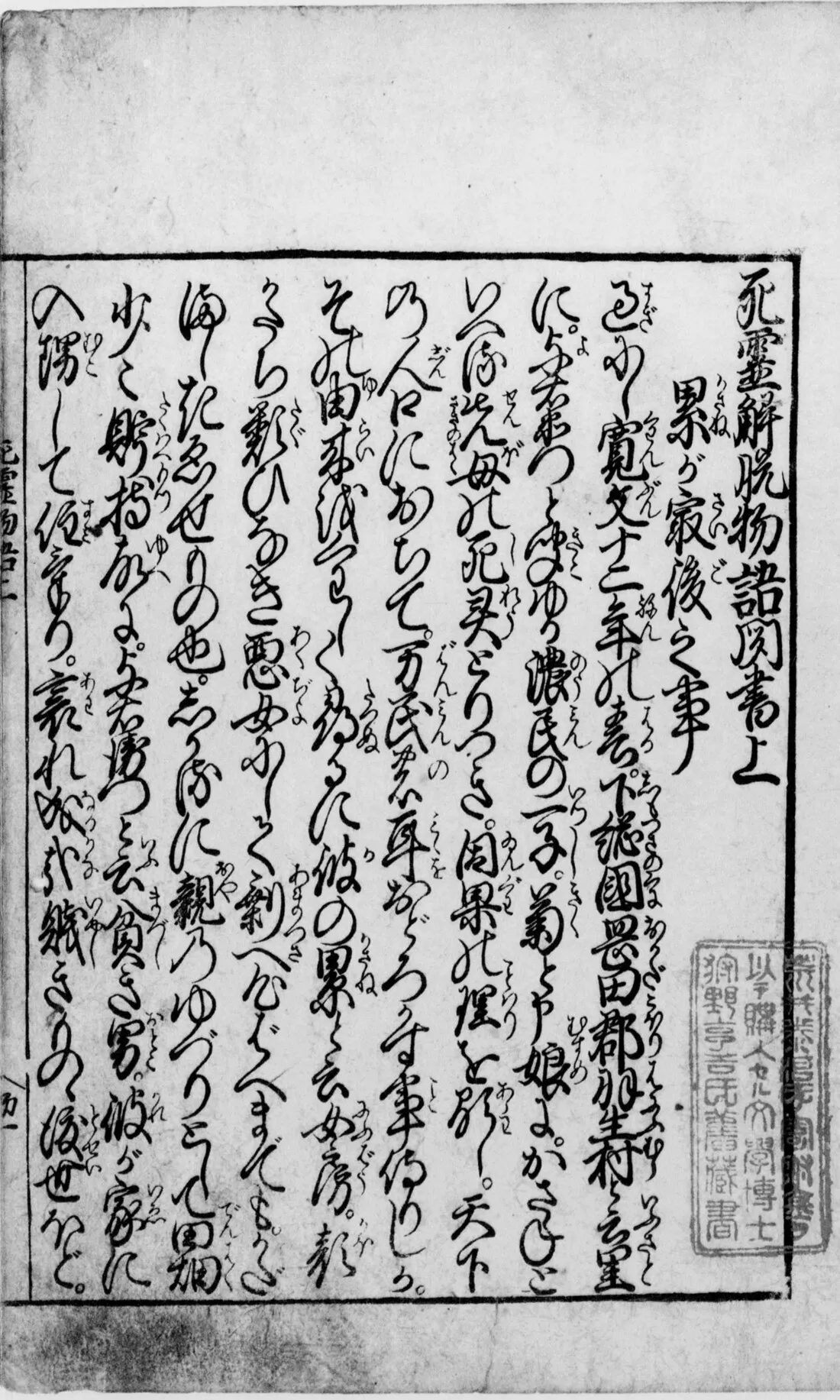
「死霊解脱物語聞書」(東北大学附属図書館所蔵), call number 4/11444/2, first leaf of the first volume, the opening of 累が最後之事 (“the death of Kasane”), cropped. Tohoku University Library digital collection, CC BY 4.0.2
What the book records, day by day
In the book, the village’s own nenbutsu came first, and Yūten came afterwards.91218 The book keeps a calendar, and this is what it gives.
| When (old calendar) | What the book records |
|---|---|
| Shōhō 4 (1647), 8th month, 11th day | Kasane’s death, entered in Hōzōji’s register3 |
| Kanbun 12 (1672), 1st month, 23rd day | Kiku collapses and Kasane speaks10 |
| 2nd month, 28th day | A village nenbutsu frees Kiku9 |
| 3rd month, 10th day | Kasane returns; that night Yūten’s recitation ends it91819 |
| 3rd month, 12th day | The stone Buddha is finished, and the abbot of Gukyōji gives Kasane a new posthumous name20 |
| 4th month, 19th day | A second spirit, the boy Sukē21 |
The book gives Yoemon a motive and a method. Kasane was ugly and spiteful and owned some land, and he was a poor man who had married into her house and resolved to kill her.22 On the way home from pulling beans he pushed her into the Kinu river, put sand in her mouth, gouged at her eyes and strangled her, then carried the body to Hōzōji and had it buried as a sudden death.23
Yūten does not arrive as a hero. The book has him say first that the matter should be left alone, because blame would fall on his master and his sect, and then decide to go.12 At Kiku’s house he and six fellow students read sutras and mantras in turn without effect, then recited the nenbutsu, then had Kiku recite it, and Kasane left.18 The book puts the end of her resentment on the night of the 10th of the third month, about the hour of the boar.19
One line in the register
The book points at one document outside itself, the register of the dead at Hōzōji, the family temple.233
戒名は妙林信女。正保四年八月十一日と。慥に彼寺の過去帳に見へたり3
Her posthumous name was Myōrin shinnyo; Shōhō 4, the eleventh day of the eighth month; it can be seen plainly in that temple’s register.
We have not seen the register. The only account of the three people that we found is the book itself. Atago calls the case one said to have happened at Hanyū in the spring of 1672, whose details can be known through the book.8
Why it was printed
Yūten lived from 1637 to 1718 and became abbot of Zōjōji in 1711.4 Scholars read the book in different ways. Takada Mamoru, as Atago quotes him, calls it a kanjin-bon, a Pure Land propaganda text, and sees its printing as part of Yūten’s mission work.5 Hattori Yukio, quoted by Kitashiro Nobuko, calls its content a sermon tale for spreading Pure Land teaching.6
Atago argues the opposite. In his reading, Yūten’s rite was a memorial service for a spirit in hell and not an exorcism, Pure Land doctrine allows no exorcism, and so the book cannot be a tract for the sect. He thinks it was printed to defend the rite to the sect, and to support the shogunate’s ban on abandoning children, which was issued again in 1690, and he ties the episode of the boy Sukē to that ban.7 The boy is the book’s second spirit, a child who, a villager says there, had been killed sixty-one years before on the order of the earlier Yoemon, Kasane’s father.21
Before 1690
The book was not the first telling. Kitashiro argues that the Kasane tale was already told in the Kokon inu chomonshū, which carries a preface dated 1684, and that it did not start as an episode in Yūten’s life story.2425 We know that text only through Atago, who quotes it as having Yūten, then a student at Gukyōji, lead fellow students to Hanyū, where the 1690 book has him refuse before he goes. He reads the change as a correction.26
The temple’s other beginning
Hōzōji stands at Hanyū on the west bank of the Kinu, and the Nihon rekishi chimei taikei says it is known for Kasane’s grave.27 The book says the stone Buddha was set up in the temple garden.20 The same dictionary entry gives another beginning, citing a Sōma diary we have not seen: a farmer’s wife named Osugi drowned her stepson Sukē in 1612, and the daughter born the next year was named Kasane.28 In the book, Sukē is a separate and later ghost, killed sixty-one years before 1672, and a stepson of Kasane’s father.21
Tomita Tetsunosuke adds that exhibitions at Hōzōji and the printed book carried the story to the cities.13
From kabuki to Enchō
By Tomita’s account the story reached kabuki in 1731, with Ōzumō Fujito Genji, and a play of 1823, Kesakake matsu Narita no rikken, carries a Kiyomoto piece called Kasane.2930 Okitsu Kaname dates Sanyūtei Enchō’s own performance of the tale to 1859.31
Enchō’s piece is not Kasane’s story. His narrator opens by calling it “the story of what came after Kasane”.32 It begins in Edo in the twelfth month of 1773 with a blind acupuncturist and moneylender, Minagawa Sōetsu, and a samurai named Fukami Shinzaemon.33 Kasane comes in at Hanyū, where two of his characters walk by the pool that still carries her name, and the narrator stops to correct what he was told there.14
與右衞門が鎌で殺したのだと申しますが、それはうそだと云う事14
There is a story that Yoemon killed her with a sickle; it is a lie, the narrator says.
He gives instead a killing with her face pushed into sand, and puts Yūten at the pool, in training, with a mat and a gong.14 The book has the nenbutsu said in Kiku’s house, and has Yūten go only after a messenger comes.1218
| The story | The record | Verdict |
|---|---|---|
| Sukē drowned in 1612 | Sixty-one years before 1672 in the book, 1612 in the dictionary2128 | Disputed |
| A sickle killed Kasane | Sand and strangling in the book; Enchō’s narrator calls the sickle false2314 | Unsupported |
| Yūten freed her first | The village’s nenbutsu came first, and she returned9 | Contradicted |
| Yūten freed her at the river | At Kiku’s house, in the book1819 | Contradicted |
The table sets the telling against the book, which is the only record we have, so it shows where the retellings part from it. It does not show that the book is right.
What we could not verify
Sources we have not seen
- Asano Shōko’s study of Hōzōji’s register of the dead (1997) would show whether Kasane’s entry exists and what it says. NDL Search and CiNii list it as a university bulletin article with no full text, and we found no open copy.
Seen only where others quote them
- The Kokon inu chomonshū of 1684, known only through Atago’s quotation. The one open scan we found is a manuscript copy whose record gives a preface of 1833, which makes it a later copy and not the 1684 text, and the text is printed in a modern series that is not online.
- Takada Mamoru’s book of 1994 and Hattori Yukio’s of 1975, known only through Atago’s and Kitashiro’s quotations. Both are in copyright and we found no scan.
Questions we could not settle
- Whether Kasane, Yoemon or Kiku appear in any record outside the book.
- Where the sickle first appears.
- Who Zanju was.
Read next
TaleMiyoshi, Hiroshima, Japan, 1749 to 1859
The Inō mononoke roku: where the demon king's mallet came from
CaseShimoda, Izu, Japan, 1884 to 1891
Kokkuri-san came ashore at Shimoda, or so Inoue Enryō heard
TaleHimeji, Hyōgo, Japan, About 1577 to 1952
How Okiku came to Himeji Castle’s well
Sources
- 死霊解脱物語聞書 (Shiryō gedatsu monogatari kikigaki), woodblock print, Edo 1690, Tohoku University Library, Kano Bunko 4/11444/2, scan from NIJL microfilm, image 70, right page, last lines: 元禄三年午 [month and day] / 本石町三丁目山形屋吉兵衛開板, passage 5 (primary) transcription
- National Diet Library catalogue record, 死霊解脱物語聞書 2巻, 残寿, 山形屋吉兵衛 (Edo), 元禄3, bibliographic record, publisher and date fields
- Tohoku University Library digital collection, record 10010000012970 (call number 4/11444/2), Notes field: 元祿三年江戸山形屋吉兵衞; 2 volumes, 71 images↑
- 死霊解脱物語聞書 (Shiryō gedatsu monogatari kikigaki), woodblock print, Edo 1690, Tohoku University Library, Kano Bunko 4/11444/2, scan from NIJL microfilm, image 2, left page (leaf 1a), under the heading 累が最後之事, first sentence, passage 1 (primary) transcription↑
- 死霊解脱物語聞書 (Shiryō gedatsu monogatari kikigaki), woodblock print, Edo 1690, Tohoku University Library, Kano Bunko 4/11444/2, scan from NIJL microfilm, image 3, left page, line 6 of the page: 戒名は妙林信女。正保四年八月十一日と。慥に彼寺の過去帳に見へたり, passage 2 (primary) transcription↑
- Atago Kuniyasu, 『死霊解脱物語聞書』研究方法論, 東洋学研究 56 (2019), pp. 213-233, p. 213 (祐天(1637―1718)), p. 227 (正徳元年(1711)に大本山増上寺三十六世)
- 日本大百科全書 (Nipponica), entry 祐天, signed Agawa Bunshō (2017); デジタル大辞泉 for 1637 to 1718, entry text: 1711年(正徳1)増上寺36世を命じられる↑
- Atago Kuniyasu, 『死霊解脱物語聞書』研究方法論, 東洋学研究 56 (2019), pp. 213-233, p. 213, quoting Takada, 新編江戸の悪霊祓い師 (1994), pp. 29, 32↑
- Kitashiro Nobuko, 祐天伝の諸本と成立について, 文藝論叢 56 (2001), pp. 196-211, p. 196, quoting Hattori, 変化論↑
- Atago Kuniyasu, 『死霊解脱物語聞書』研究方法論, 東洋学研究 56 (2019), pp. 213-233, pp. 214 to 215 (aims), p. 219 (the book as a tract), pp. 226 to 228 (the ban of 1690, Yūten's later posts)↑
- Atago Kuniyasu, 『死霊解脱物語聞書』研究方法論, 東洋学研究 56 (2019), pp. 213-233, p. 213, first paragraph (実際にあったとされる憑霊事件)↑
- 死霊解脱物語聞書 (Shiryō gedatsu monogatari kikigaki), woodblock print, Edo 1690, Tohoku University Library, Kano Bunko 4/11444/2, scan from NIJL microfilm, image 36, left page (first page of the second volume, 下), heading 累が灵亦來る事 附名主後悔之事, first lines (primary)↑
- 死霊解脱物語聞書 (Shiryō gedatsu monogatari kikigaki), woodblock print, Edo 1690, Tohoku University Library, Kano Bunko 4/11444/2, scan from NIJL microfilm, images 3 to 5, section 累が怨霊來て菊に入替る事, from 菊が十四の春 to the speech beginning 我は菊にあらず (primary)↑
- 死霊解脱物語聞書 (Shiryō gedatsu monogatari kikigaki), woodblock print, Edo 1690, Tohoku University Library, Kano Bunko 4/11444/2, scan from NIJL microfilm, image 38, right page, last lines, into the left page, first twelve lines, passage 3 (primary) transcription↑
- 死霊解脱物語聞書 (Shiryō gedatsu monogatari kikigaki), woodblock print, Edo 1690, Tohoku University Library, Kano Bunko 4/11444/2, scan from NIJL microfilm, images 39 to 40, section 祐天和尚累を勧化し給ふ事, from 師匠の名までくだしなば to 我行て吊はん (primary)↑
- 改訂新版 世界大百科事典, entry 累物, signed Tomita Tetsunosuke, entry text, first and third sentences↑
- 三遊亭圓朝, 真景累ヶ淵, Aozora Bunko card 350 (typed from Teihon Enchō zenshū vol. 1, 1963; parent edition Shunyōdō 1926), chapter 22 (二十二), the paragraph beginning 羽生村へ出ますが、其所は只今以て累ヶ淵と申します (primary)↑
- Atago Kuniyasu, 『死霊解脱物語聞書』研究方法論, 東洋学研究 56 (2019), pp. 213-233, p. 213 (残寿編), p. 233 (残寿が何者であったかは定かでない; the shared 残 in the names of Gukyōji monks suggests he belonged to Gukyōji)
- National Diet Library catalogue record, 死霊解脱物語聞書 2巻, author field: 残寿↑
- 死霊解脱物語聞書 (Shiryō gedatsu monogatari kikigaki), woodblock print, Edo 1690, Tohoku University Library, Kano Bunko 4/11444/2, scan from NIJL microfilm, image 51, left page, last three lines, continuing on image 52, right page, passage 4 (primary) transcription↑
- 死霊解脱物語聞書 (Shiryō gedatsu monogatari kikigaki), woodblock print, Edo 1690, Tohoku University Library, Kano Bunko 4/11444/2, scan from NIJL microfilm, image 70, right page, the last long line before the date, passage 5 (primary) transcription↑
- 死霊解脱物語聞書 (Shiryō gedatsu monogatari kikigaki), woodblock print, Edo 1690, Tohoku University Library, Kano Bunko 4/11444/2, scan from NIJL microfilm, images 41 to 47, same section, from 今さらば各〻 to the dated line (primary)↑
- 死霊解脱物語聞書 (Shiryō gedatsu monogatari kikigaki), woodblock print, Edo 1690, Tohoku University Library, Kano Bunko 4/11444/2, scan from NIJL microfilm, image 47, right page, lines 6 to 9 of the page: 寛文十二年三月十日の夜。亥の刻ばかりに (primary)↑
- 死霊解脱物語聞書 (Shiryō gedatsu monogatari kikigaki), woodblock print, Edo 1690, Tohoku University Library, Kano Bunko 4/11444/2, scan from NIJL microfilm, images 50 to 51, section 石佛開眼之事 (primary)↑
- 死霊解脱物語聞書 (Shiryō gedatsu monogatari kikigaki), woodblock print, Edo 1690, Tohoku University Library, Kano Bunko 4/11444/2, scan from NIJL microfilm, images 52 to 63, section 顕誉上人助か灵魂を吊給ふ事; the sixty-one years at about image 59, the name given at about image 63 (primary)↑
- 死霊解脱物語聞書 (Shiryō gedatsu monogatari kikigaki), woodblock print, Edo 1690, Tohoku University Library, Kano Bunko 4/11444/2, scan from NIJL microfilm, images 2 to 3, right page, the paragraph after the opening sentence of 累が最後之事 (primary)↑
- 死霊解脱物語聞書 (Shiryō gedatsu monogatari kikigaki), woodblock print, Edo 1690, Tohoku University Library, Kano Bunko 4/11444/2, scan from NIJL microfilm, image 3, left page (leaf 2a), lines 1 to 6 of the page, passage 2 (primary) transcription↑
- Kitashiro Nobuko, 祐天伝の諸本と成立について, 文藝論叢 56 (2001), pp. 196-211, p. 203 (すでに…以前に成立した『古今犬著聞集』に伝えられている), p. 209 (conclusion)↑
- Ōkubo Junko, 説話にみる文事の志向: 『古今犬著聞集』序文と考証的説話, 文芸と思想 86 (2022), pp. 1-15, p. 1 (天和四年(一六八四)の序をもつ全十二巻), p. 2 (preface dated 天和四年甲子歳孟春)
- Atago Kuniyasu, 『死霊解脱物語聞書』研究方法論, 東洋学研究 56 (2019), pp. 213-233, p. 226 (椋梨一雪編『古今犬著聞集』(1684))↑
- Atago Kuniyasu, 『死霊解脱物語聞書』研究方法論, 東洋学研究 56 (2019), pp. 213-233, p. 226, quoting the Kokon inu chomonshū in Kanazōshi shūsei 28, p. 160b↑
- 日本歴史地名大系 (unsigned), entry 法蔵寺 (Hanyū, Mizukaidō city, Ibaraki), entry text: 累(かさね)の墓があることで知られる↑
- 日本歴史地名大系 (unsigned), entry 法蔵寺, entry text: 慶長一七年(一六一二)に助を鬼怒川縁の横濠に沈めて殺した↑
- 改訂新版 世界大百科事典, entry 累物, signed Tomita Tetsunosuke, entry text: 《大角力藤戸源氏》(1731)で初めて歌舞伎化された↑
- 改訂新版 世界大百科事典, entry 累物, signed Tomita Tetsunosuke, entry text: 《法懸松成田利剣》([清元]《累》を含む,1823)↑
- 改訂新版 世界大百科事典, entry 三遊亭円朝, signed Okitsu Kaname, entry text: 1859年(安政6)の《累ヶ淵後日怪談(真景累ヶ淵)》の自作自演↑
- 三遊亭圓朝, 真景累ヶ淵, Aozora Bunko card 350 (typed from Teihon Enchō zenshū vol. 1, 1963; parent edition Shunyōdō 1926), chapter 1 (一), first paragraph (primary)↑
- 三遊亭圓朝, 真景累ヶ淵, Aozora Bunko card 350 (typed from Teihon Enchō zenshū vol. 1, 1963; parent edition Shunyōdō 1926), chapter 1 (安永二年十二月二十日), chapter 6 (深見新左衞門が宗悦を殺しました事は誰有って知る者はござりません) (primary)↑


Documents quoted
- Shiryō gedatsu monogatari kikigaki (1690): the opening, the register entry, the headman's regret, the closing note and the colophon (transcribed from the page image)